
How to Search the Austin Court Docket
Austin shares more court procedure than most small cities. Its pages stop short of case-level dates, though. That gap leaves the phone as your main tool. Begin with the ticket or notice in hand and copy down the court name, citation number, each violation, and the response date. Those details make any clerk conversation short. Call the Austin clerk for the live setting and the local event history behind it. Search ARCourts is the better stop when the matter sits in Circuit Court. It also helps when participating public data covers it.
- Confirm that the notice names the Austin court department.
- Gather the citation or case number and exact name.
- Call 501-941-2648 for the current Austin docket and setting.
- Use the official payment link only after confirming eligibility and effect.
- Request a certified disposition from the clerk that filed the matter.
No online record does not mean the case is over. Local custody, a recent filing, a spelling mismatch, restricted status, or the wrong court layer could each explain the empty result.
Austin Docket Means Court Schedule
Austin's own procedures page defines the docket as the schedule of the court. That local meaning matters. Elsewhere a docket can mean the chronological index of filings. That index lives inside a case file. When Austin says "the docket," it is often pointing to when cases get called. Ask the clerk directly whether the answer concerns the calendar or the filed event history.
- Court docket
- Austin’s published term for the court schedule.
- Docket entry
- A dated line that records a filing, setting, order, or court action.
- Setting
- A scheduled appearance for a stated purpose.
- Reset
- A replacement date that follows an earlier setting.
That simple distinction prevents a common mix-up. A schedule answer tells you when to appear, while a copy request seeks the public record behind the case.
The Austin Municipal Court
The office goes by the name Austin Municipal Court. Statewide structure places the city inside the 30th State District Court and District Division 2. Judge Clint McGue presides, and Brenda Kleck serves as clerk. You will find the court at 3181 Highway 367 North, Austin, Arkansas 72007. Reach the clerk at 501-941-2648 or bkleck@austin-ar.com. The official Austin court page lists the judge. It also gives the court's local identity and the payment route.
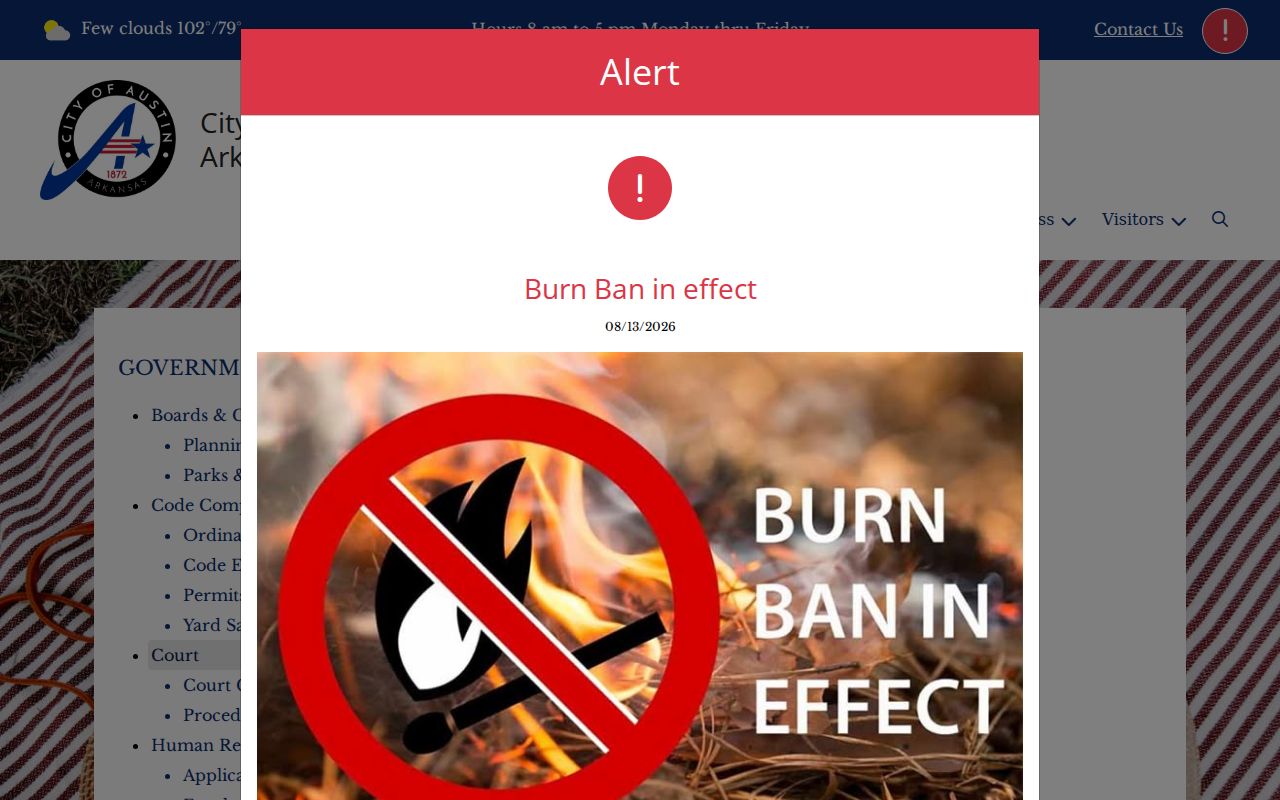
Treat that page as an official gateway, not a case-result screen. The clerk still supplies the event history, the current setting, and the copy procedure.
Austin Clerk Hours and Closures
The Austin clerk keeps weekday counter hours from 8:00 a.m. to 5:00 p.m. The office closes for holidays and declared emergencies. Published closures cover New Year's Eve and Day, Memorial Day, July Fourth, Labor Day, Veterans Day, Thanksgiving, Christmas Eve, and Christmas Day. A closure can interrupt counter service. It can also derail a planned appearance, so check before you drive.
Before an Austin appearance: call 501-941-2648 to confirm the date, time, location, and whether a holiday or emergency has changed access.
The official page publishes no case-level event calendar. That makes the phone call part of Austin's real fallback chain, not an optional extra after an online lookup.
Austin Court Dates and Settings
Read Austin settings in sequence. A citation or first notice may show an initial date, and a continuance, reset, or order may follow. The most recent valid entry controls. Older dates stay in the history and should never be mistaken for the active setting.
| Date | The current day after any later Austin reset. |
|---|---|
| Time | The court or clerk-confirmed start time. |
| Location | 3181 Highway 367 North unless the court directs otherwise. |
| Judge | Judge Clint McGue or the judicial officer named by the court. |
| Setting Type | Plea, pretrial, docket call, trial, review, or other event. |
Ask whether appearance instructions have changed. Do not trust an old screen, and never assume payment cancels a date unless the court confirms it.
Austin Courtroom Entry Rules
Austin posts unusually specific courtroom rules. Phones and other mobile devices must be turned off. Photography and audio recording are prohibited. Food and drink stay outside the courtroom. The dress guidance bars flip-flops, exposed underwear or midriff, see-through clothing, and clothing with offensive content. Remember that these rules belong to Austin alone and should not be generalized to every Lonoke County courtroom. Check the Austin calendar and dress-code page before you appear, and call the clerk if you need an accommodation or current instruction. Arriving with the right case details and following the entry rules cuts delay at docket call.
Austin Traffic Tickets
An Austin ticket should show the court and the charged violations. It should also carry a response or appearance date. Contact the clerk before that deadline passes. Payment may constitute or accompany a plea. Ask what paying will do to your case before you send money. To fight the citation, use the plea or trial-request process the court permits. Get the actual setting in hand. One routing quirk trips people up. The city attorney does not prosecute Austin District Court tickets. Austin's official city attorney page sends ticket, fine, and court-case questions to the prosecuting attorney's office instead. For records, dates, and procedure, the clerk remains the practical source. Countywide routing help is at Lonoke County traffic court records.
Austin Payment Portal Limits
Austin links to Arkansas Court Payment. The portal can accept an eligible payment, but it does not replace the Austin court docket. Before you pay, verify the court and citation. Review the amount and any service charge. Understand the legal effect of paying, and save your confirmation once it clears.
| Tool | Provides | Does not provide |
|---|---|---|
| Austin court page | Judge, clerk route, payment link | Case results |
| Payment portal | Eligible transaction path | Full event history |
| Austin clerk | Current local status and copies | Legal advice |
A receipt is not a certified disposition. If you need the official outcome of your Lonoke County case, ask the Austin clerk for the authenticated result.
Where Austin Cases End Up
Austin's local department handles its limited-jurisdiction matters. Felonies, major civil suits, domestic relations, probate, and juvenile cases all begin in Lonoke County Circuit Court. A lawful District appeal can create a Circuit file. But a city ticket does not become a Circuit case just because it arose in Lonoke County.
Docket flow: Austin Municipal Court › Lonoke County Courts › Circuit Court (Twenty-Third Judicial Circuit)
Need Circuit case information for Austin? Search ARCourts is the tool that pulls it up. The Austin clerk holds the original local file. A certified copy has to come from that office. The county-level Circuit record, though, lives with the Lonoke County Circuit Clerk. For the bigger picture, the Lonoke County court docket overview walks through that county layer in full.
Austin and Federal Record Layers
A state or city case never becomes a bankruptcy matter on appeal. Federal bankruptcy sits in its own jurisdiction. It has a separate clerk and a docket system built for that court alone. The U.S. Bankruptcy Court source shows how that federal record layer works. It runs on its own terms.
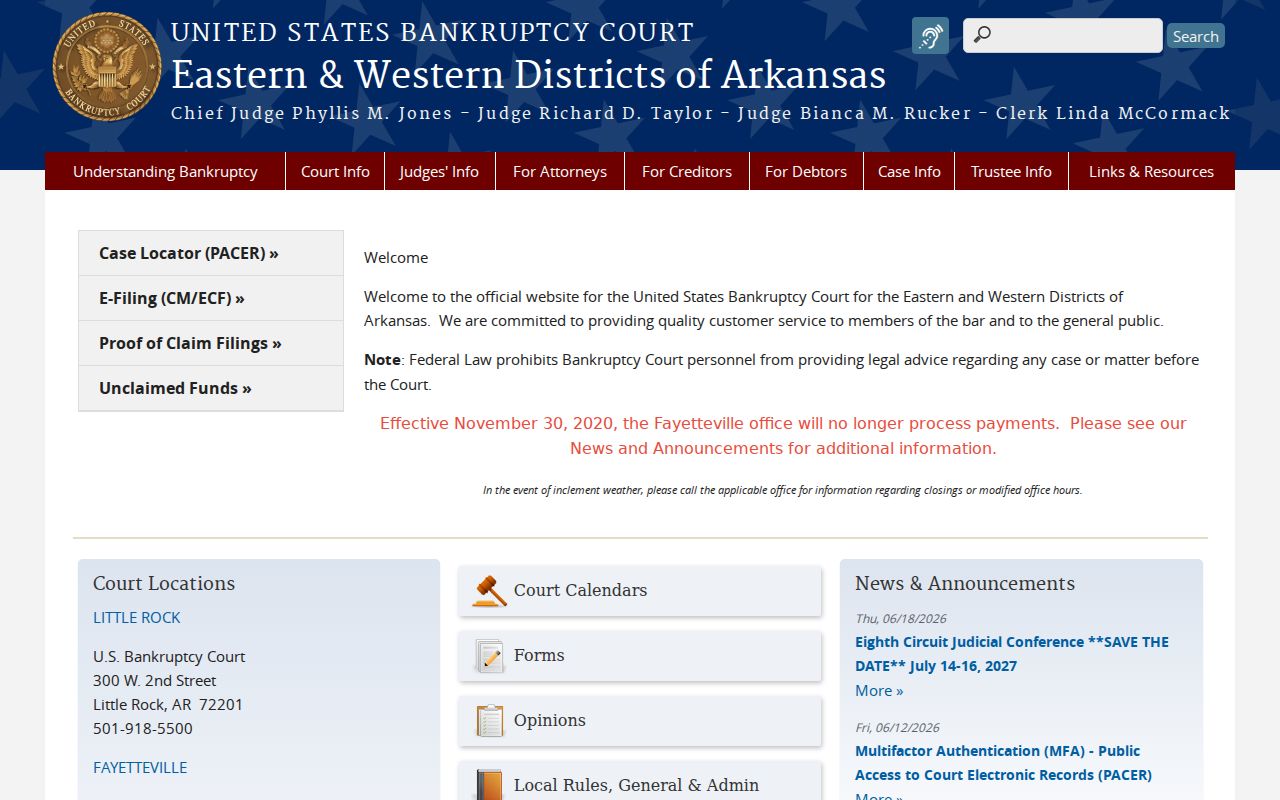
That boundary is worth remembering. A city citation belongs with the Austin clerk. State Circuit information belongs in Search ARCourts. The federal court system matters only for an actual federal bankruptcy matter, and nothing in an Austin case file travels there without one.
Public Access to Austin Court Records
Arkansas court-record access runs under Administrative Order 19. Anyone may request public Austin records from the clerk. Protected identifiers and confidential categories stay out of what the clerk can release. Sealed matters, juvenile records, adoption records, and anything shielded by statute or order follow separate rules entirely.
Key rules:
Administrative Order 19 provides the court-record access framework.
Administrative Order 21 governs electronic filing.
Arkansas Code §9-27-309 protects juvenile records.
A missing entry does not prove sealing. Before assuming anything, ask the clerk whether wrong venue, new data, local custody, or a restriction explains the result.
Certified Austin Court Records
A certified Austin disposition comes from the Austin clerk. Give the clerk the citation or case number. Add the party name, the violation, and any event or disposition date you know. Say whether you want a plain copy or a certified one, and how many. The clerk posts no Austin-specific copy fee, delivery schedule, or full fine list. Confirm the current cost and payment method before sending funds. When a District appeal opens a Circuit file, each office authenticates its own layer. The Austin clerk certifies the local record. The Circuit Clerk certifies the later Circuit record.
Austin Docket Conflict Check
Two Austin dates can both be real docket history while only one stays active. Start with the ticket. Then read any later notice, reset, or continuance in date order. Ask the clerk to state the current event, its purpose, and whether a written notice controls. The old date does not vanish. A schedule change does not erase it. Declared emergencies count as much as listed holidays. Austin states that clerk access may close for both. Keep the citation and later notices. Note the time of your clerk call. Ask how a change will be recorded. These steps support the court’s order rather than replace it. They simply match the paper in hand to the live Austin schedule. Austin and Cabot share District Division 2, but not all local records. An Austin ticket stays with the Austin department unless lawful process creates a new file. A shared judge does not make the Cabot clerk the custodian. The court printed on the citation controls the first call. Brenda Kleck’s office should confirm any transfer or appeal. Ask another clerk for a copy only after that.
Austin Court Population Context
Austin counted 3,460 residents in the 2020 Census. That ranks fourth among Lonoke County’s incorporated cities. Scale is not workload, though. The city publishes no annual municipal caseload figure. Population cannot be turned into an estimate of ticket volume, hearing delay, or docket-call size. For a specific Austin appearance, the clerk’s current schedule is the factual source. What a searcher actually gets here is unusually clear local procedure rather than a case count. The clerk contact, the schedule definition, hours, holiday list, entry rules, and payment link build a stronger fallback chain. No statistical guess could match it.
Austin Prosecutor Contact Boundary
Austin’s official city attorney page is direct on one point. The city attorney does not prosecute tickets in Austin District Court. Ticket, fine, and court-case questions go to the prosecuting attorney’s office instead. The boundary matters. A city-government title can sound like the right stop even when it sits outside the case path. Bring docket questions to the Austin clerk: settings, recorded pleas, payment status, and copy requests. The prosecutor carries the government’s side and cannot substitute for the clerk’s certified record. Treat the city attorney as no detour for a local ticket question. Keeping the roles straight makes each request sharper. Legal strategy is outside the clerk’s role too. Anyone weighing a plea or a defense should seek qualified counsel. The clerk can still explain the available procedure. The clerk can state what the record shows. The clerk can give the current Austin appearance information.
Austin Holiday Docket Planning
Austin publishes a longer closure list than most city profiles. It covers New Year's Eve and Day, Memorial Day, July Fourth, Labor Day, Veterans Day, Thanksgiving, Christmas Eve, Christmas Day, and any declared emergencies. Handy for planning a clerk call. Still, a closure tells you nothing about whether your case actually moved.
If your court date sits near a holiday, call 501-941-2648. Ask whether a later order or notice controls. Use the same call to confirm the court site, the start time, and any entry rules. Keep any written change together with the original citation, since both may explain the docket history.
A closed counter can also stall copy pickup. Ask the clerk whether you can email a request to bkleck@austin-ar.com. Ask about another approved method. You can also wait for normal office access. Get instructions first. A standard email-copy workflow is not guaranteed. Never send protected information before the clerk tells you how.
Austin Docket Final Match
Before you trust any Austin docket result, check four things: the Austin court, the Austin citation number, the Austin party name, and the latest Austin event. A mismatch on any one of them means you may be reading the wrong case. When an Austin notice conflicts with an old Austin date, the Austin clerk settles it.
Know what each document proves. An Austin payment receipt proves the Austin transaction. The Austin docket records the case history. The certified result comes from the Austin clerk.
Use the Austin schedule for your next appearance and the event history for what has already happened. When the difference matters, ask for both.